
TinyTrails
/
UX / UI
Re–imagining Brisbane city.
Overview
An Augmented Reality (AR) discovery app designed to encourage exploration of Brisbane's local sights and hidden gems.
Role + Contributions
Lead Interaction Designer
Research Synthesis + Analysis
Ideation + Conceptualisation
Prototyping [Low–Mid–High–Fidelity]
Branding
Technology + Equipment
Figma + Sketchfab
Completed
Jun. 2024
*Re–designed Dec. 2025
introduction
"Brisbane is SO boring," said majority of young people, ever.
Brisbane is locally known as Australia’s most boring city. With the city’s major attractions remaining unchanged throughout the years, locals and tourists alike are left stumped on places to see and things to do.
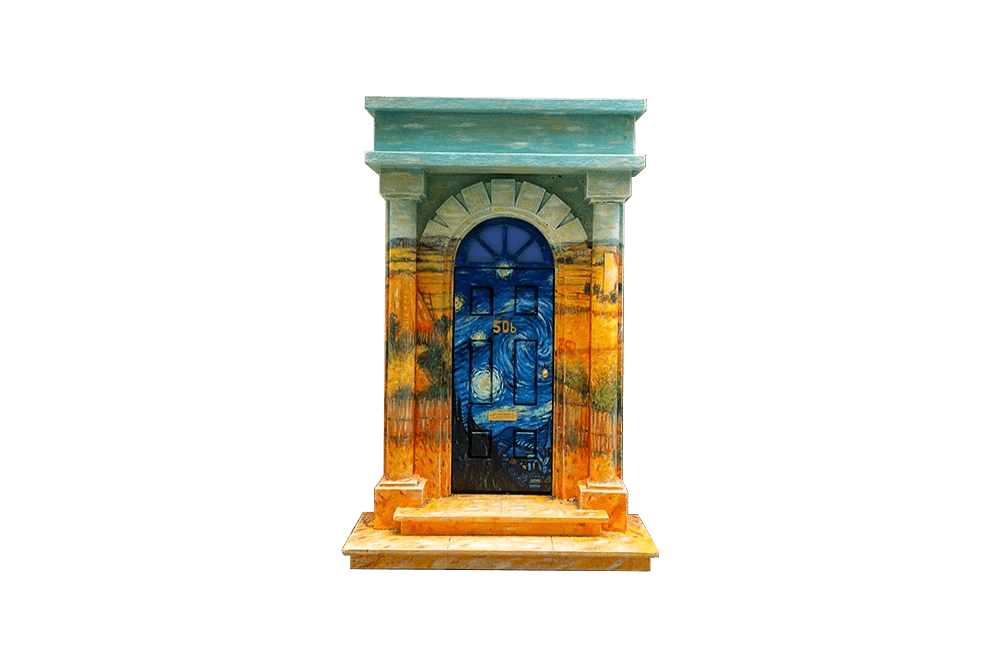
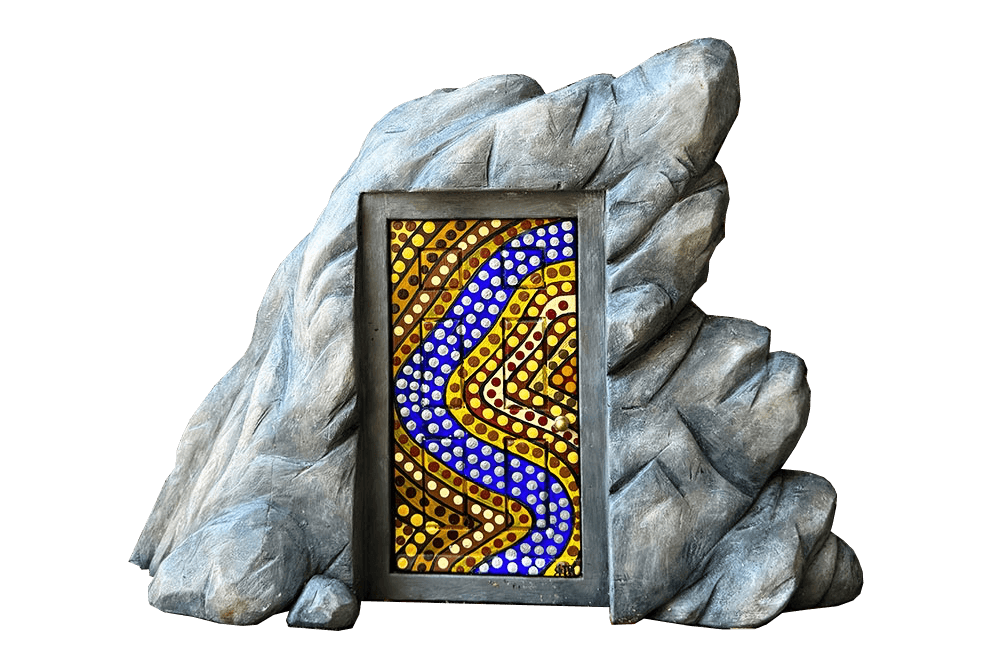
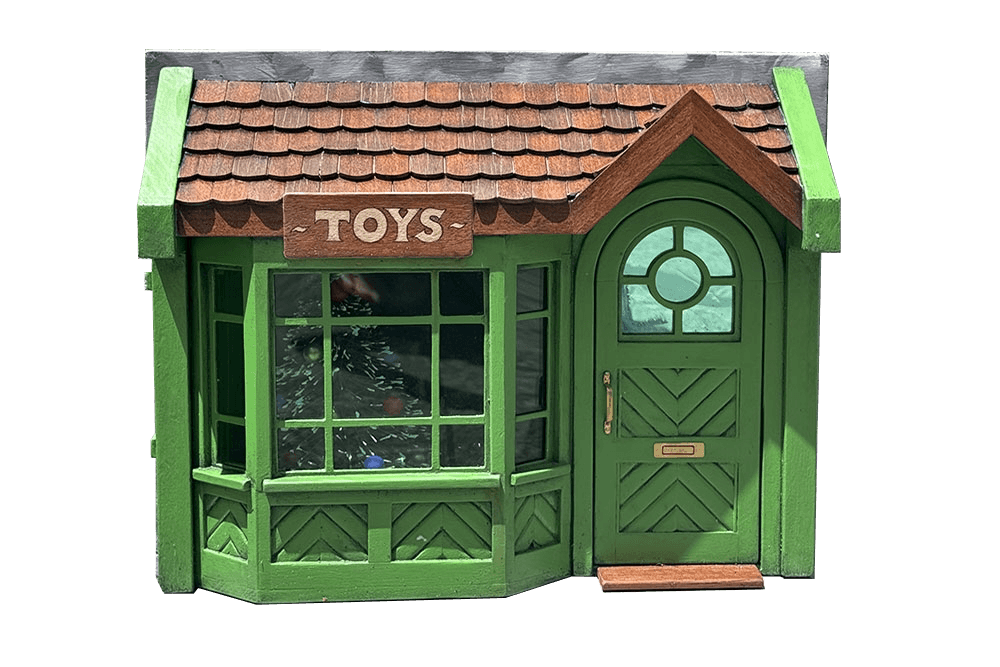
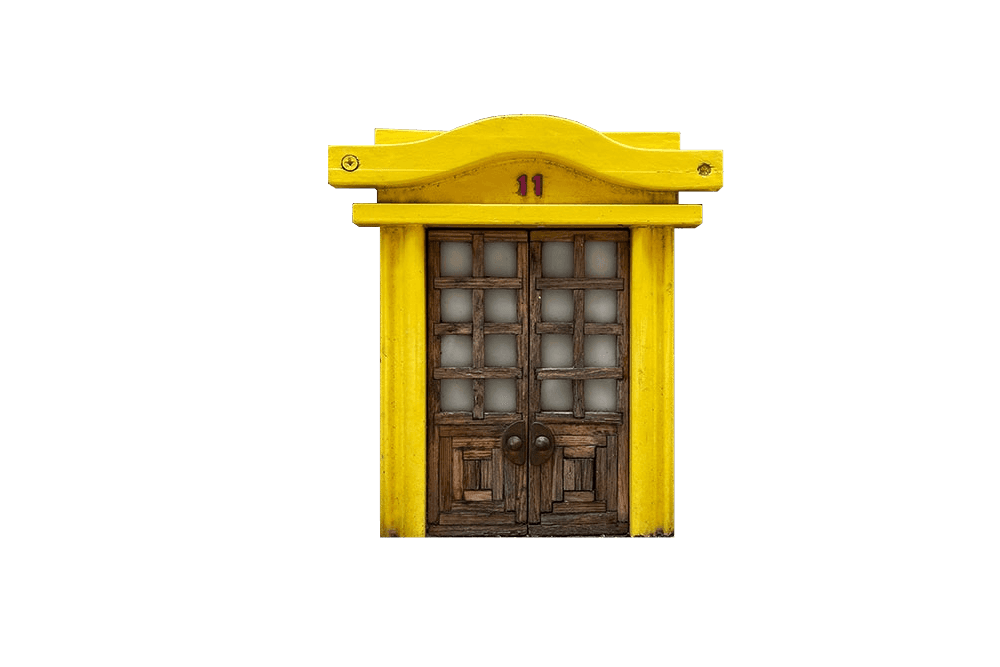
However, there is one distinct yet rarely mentioned Brisbanian feature in travel guides and blogposts worth exploring: Tiny Doors.





TinyDoors
Yes, it's exactly as the name
suggests.
Tiny Doors are thematic, miniature doors designed by local artists and mysteriously placed in various locations around Brisbane’s inner-city suburbs.
Discovered in 2017, Tiny Doors have been steadily popping up ever since, allowing passers-by to enjoy a miniature slice of novelty and wonderment as they stumble across the artworks.



problem
Tourists are unaware of this uniquely Brisbane feature, and locals pay little significance towards it.
So, how might we encourage interaction with Tiny Doors and increase user retention, while promoting tourism and local arts?
Opportunity
Augmented Reality
+
Gamification
=
Brisbane re–imagined.
I proposed a solution to combine augmented reality (AR) and gamification techniques to create a mobile discovery game that allows users to experience Brisbane in a completely re—imagined way by reconstructing Tiny Doors into interactive Tiny Worlds.
Through the integration of AR and gamification, TinyTrails transcends the single, static interaction initially experienced (i.e., simply stumbling across the Tiny Door), to something more immersive and expansive.
PROCESS
After researching into gamification theory and strategy, we refined our concept, and selected our target audience.
While TinyTrails can be enjoyed by a wide audience, research pinpoints local and tourist adolescents aged between 12 to 19 as our primary user both conceptually (i.e., simple, adventurous) and stylistically (i.e., cartoonish, whimsical).
From here, a user journey was mapped out.
This process began by mapping out key screens, interactions, and affordances our users would experience within TinyTrails. Our personas Kira & Emily were consistently referred back to at each iterative stage to continually ground our design solution in research.
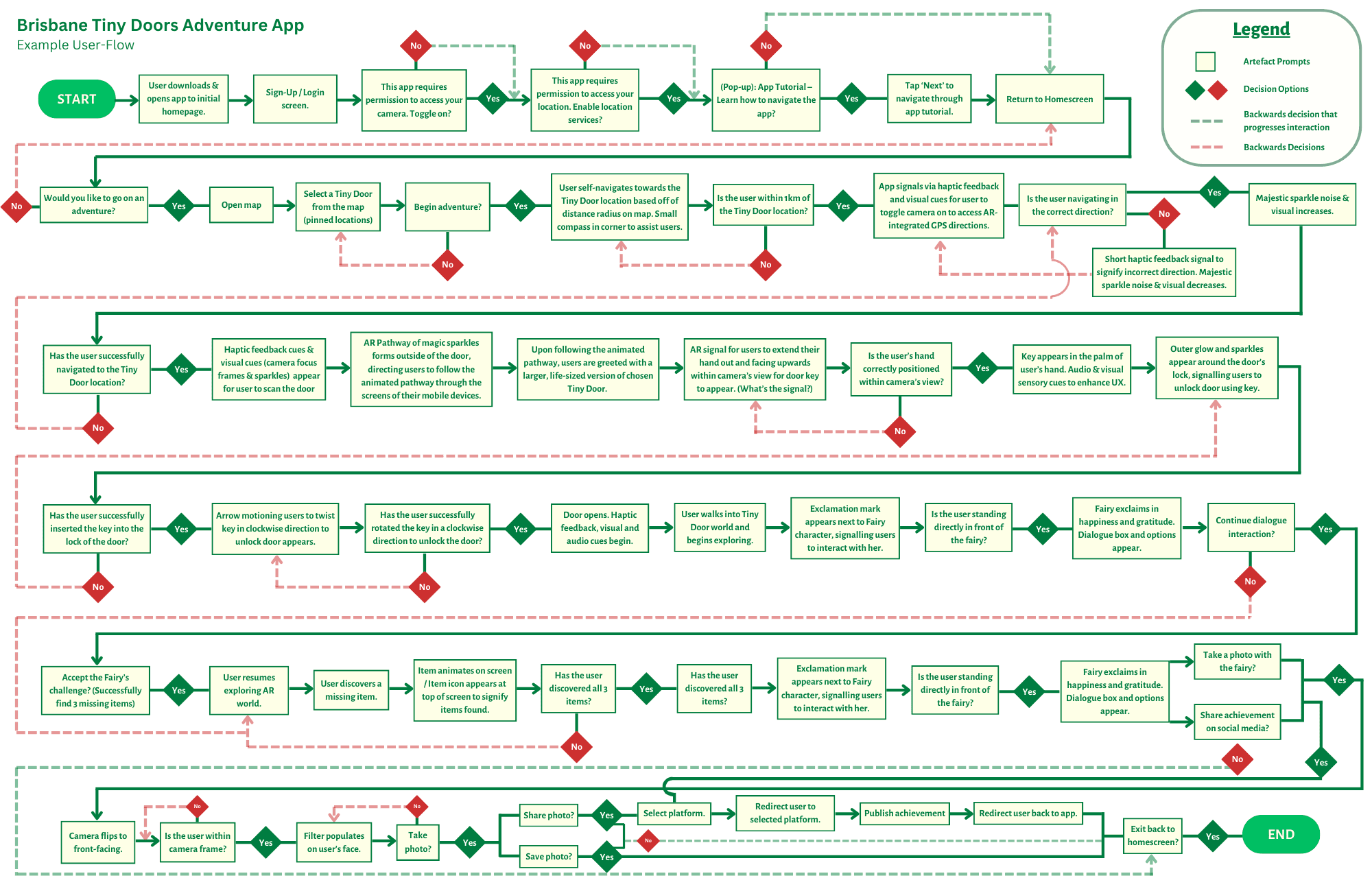
Early prototyping covered core interactions such as navigation, door—scanning, unlocking, and token collection functionalities.
We put our design to the test. The verdict? A little too simple and youthful in appearance.
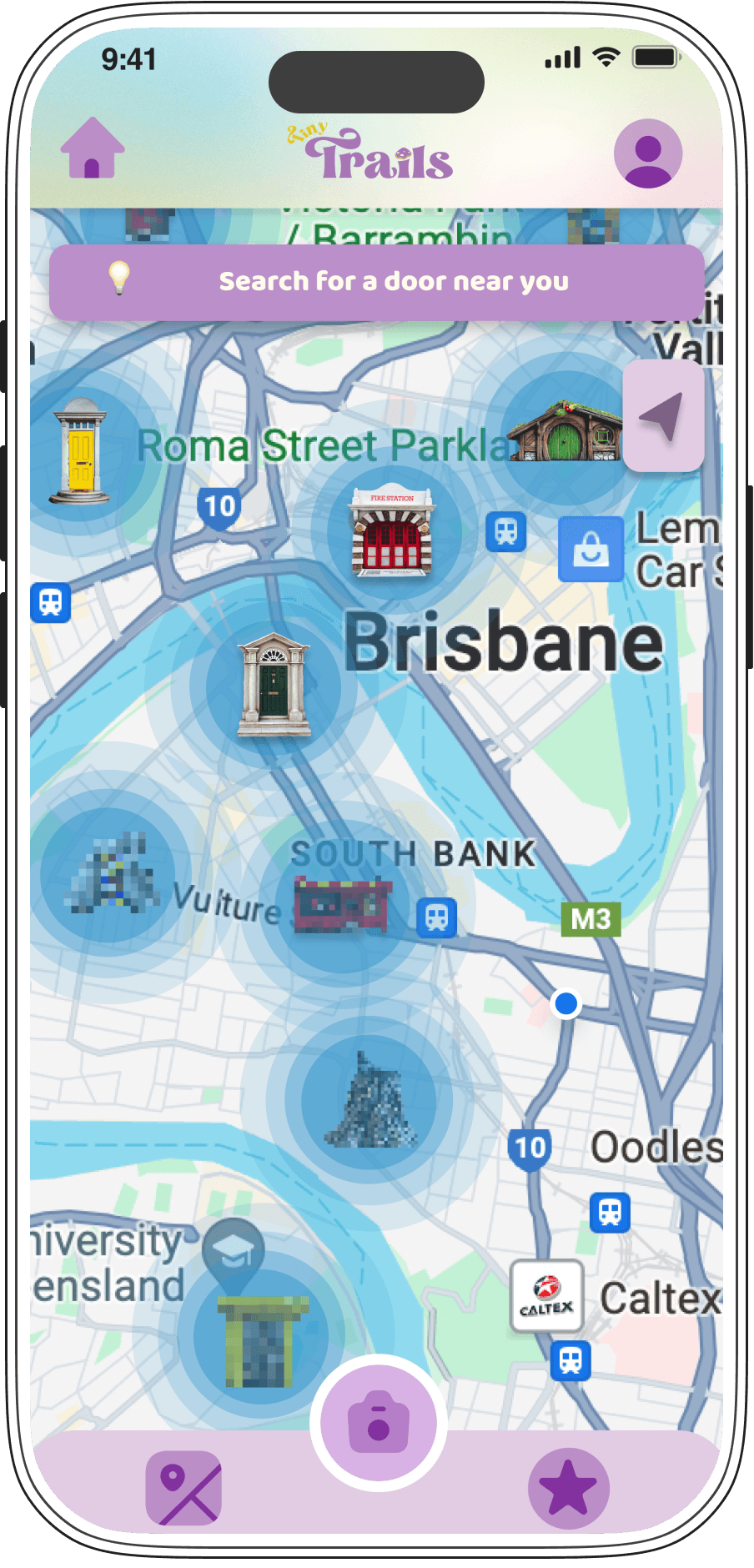
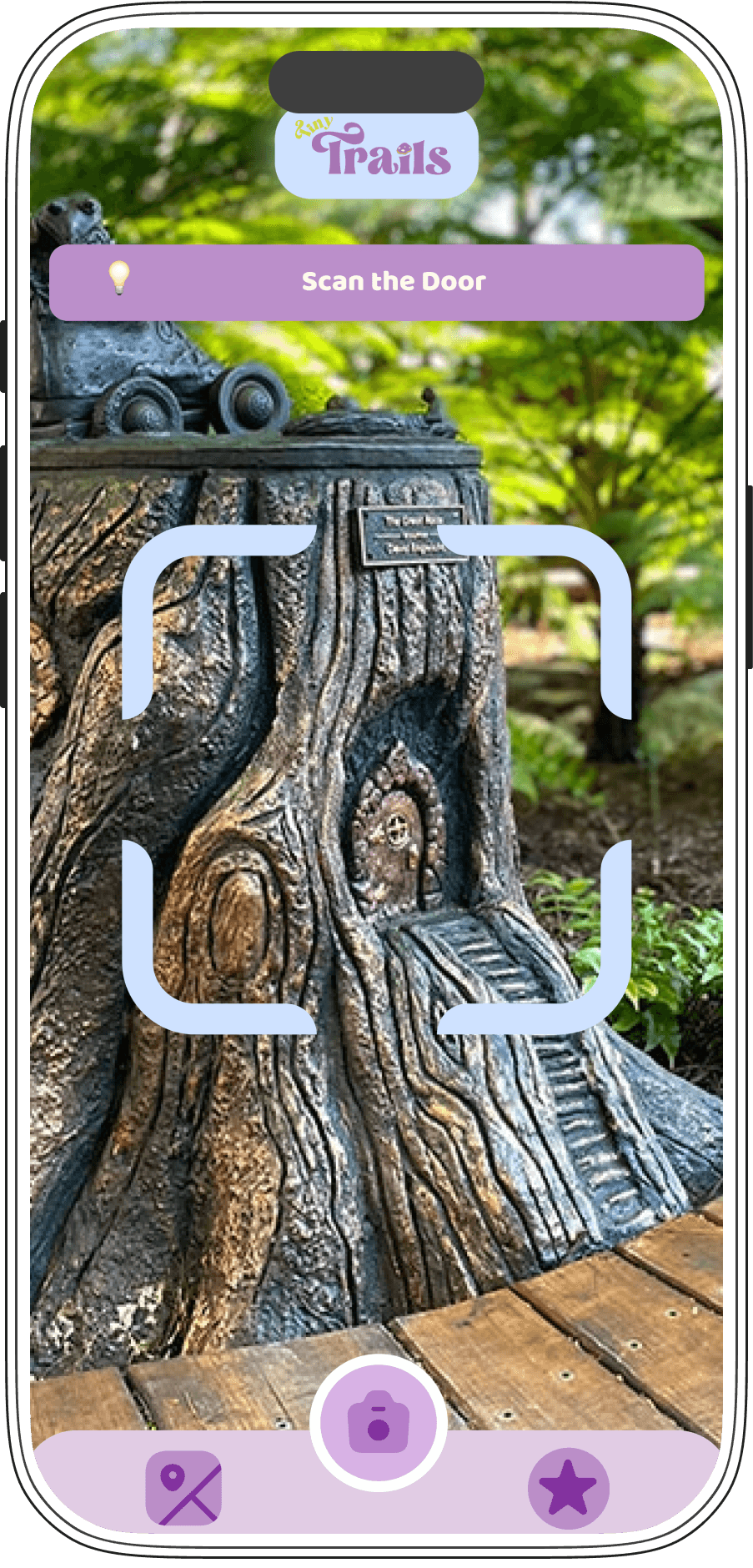
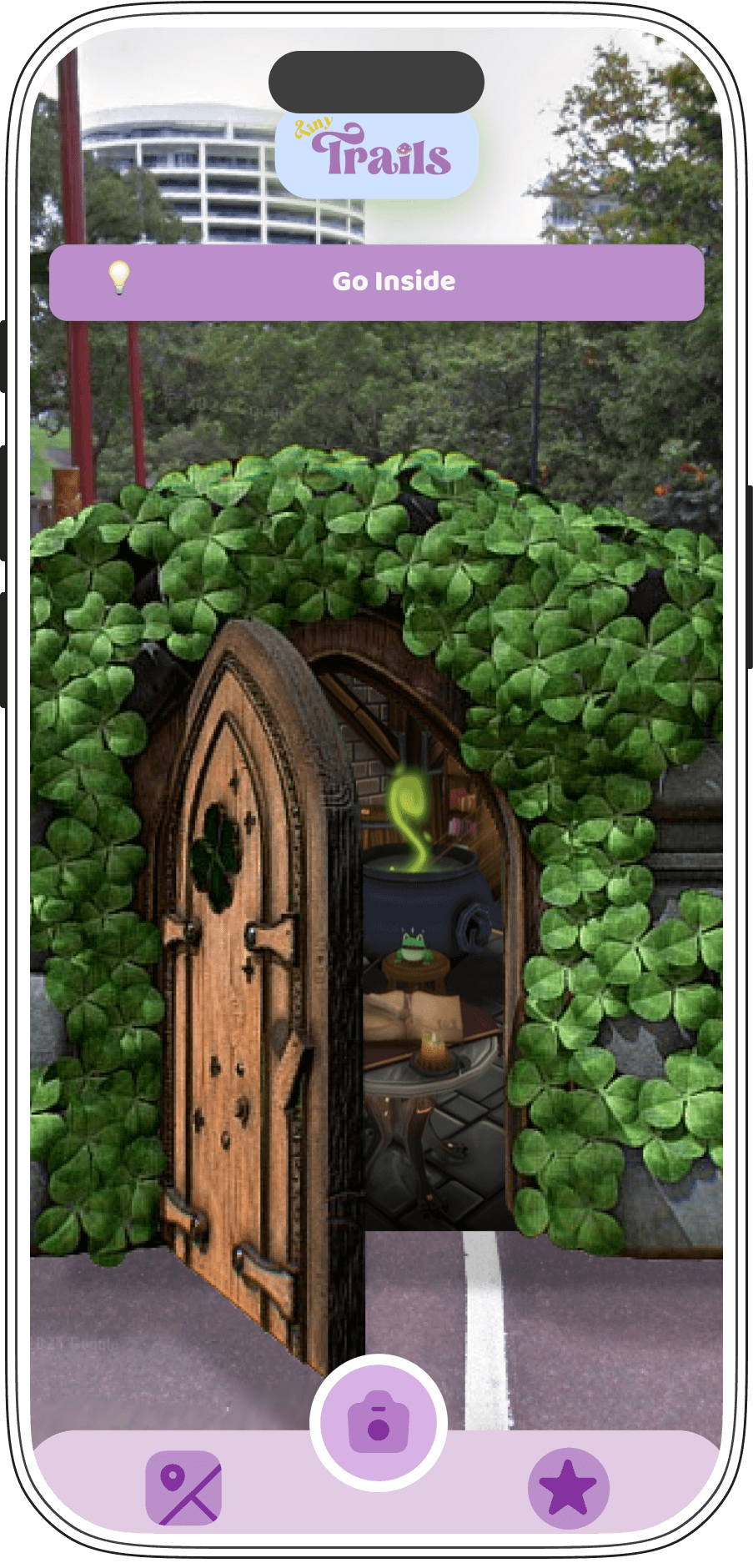
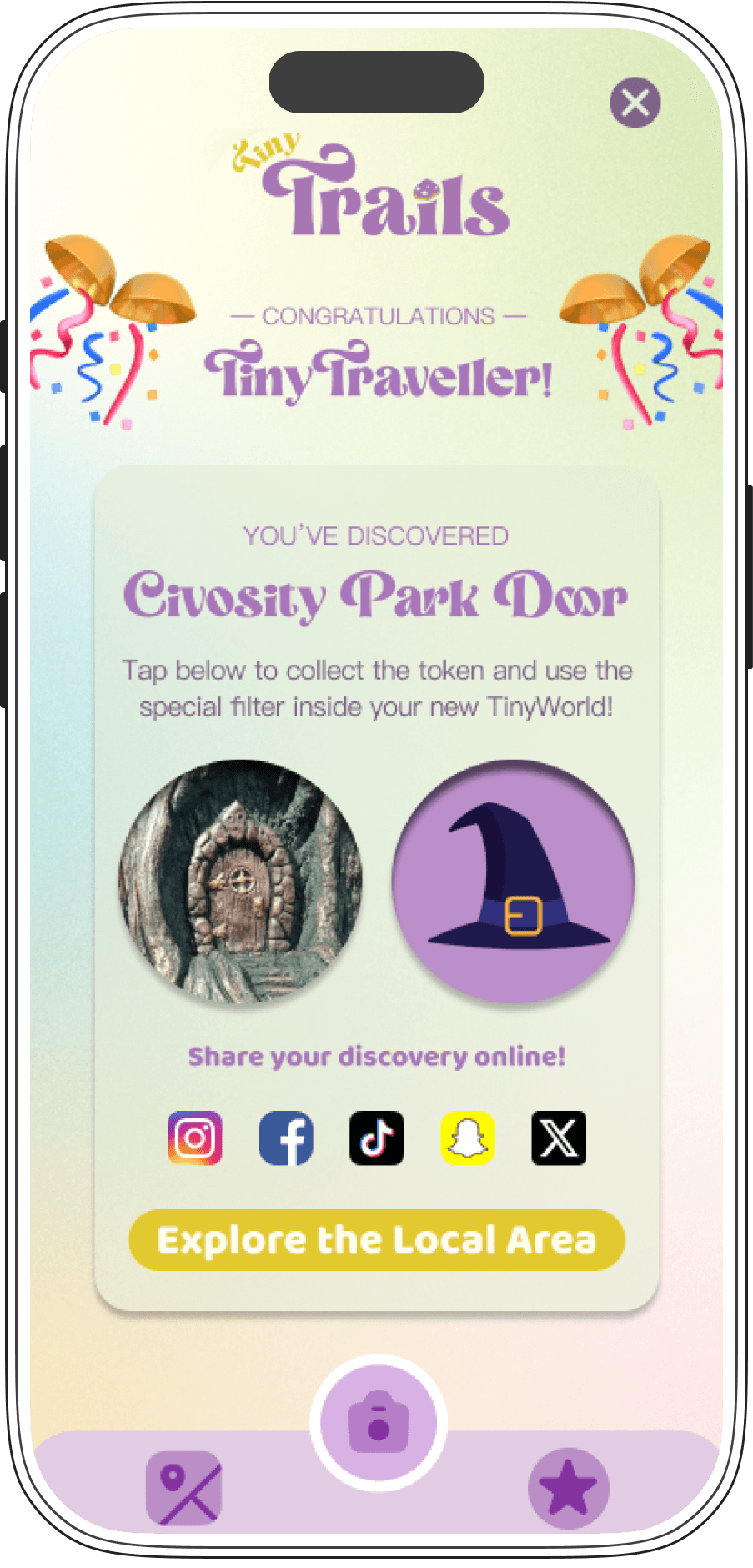
Other valuable insight was gained through conducting user—testing sessions. Below are the most notable areas of improvement.
Physical accessibility is equally as important as visual and digital accessibility
Tiny Doors are tiny. Situated low to the ground, it was important to consider user accessibility in the face of mobility restraints.
Initially, we had planned for the users to physically bend down and scan the door. Upon reflection, we realised this might not be feasible for some. We revised our concept to allow users to scan the Tiny Doors from wherever they are, and upon doing so, an enlarged, Augmented—Reality version of the Tiny Door will appear.
Centralised features for quick access
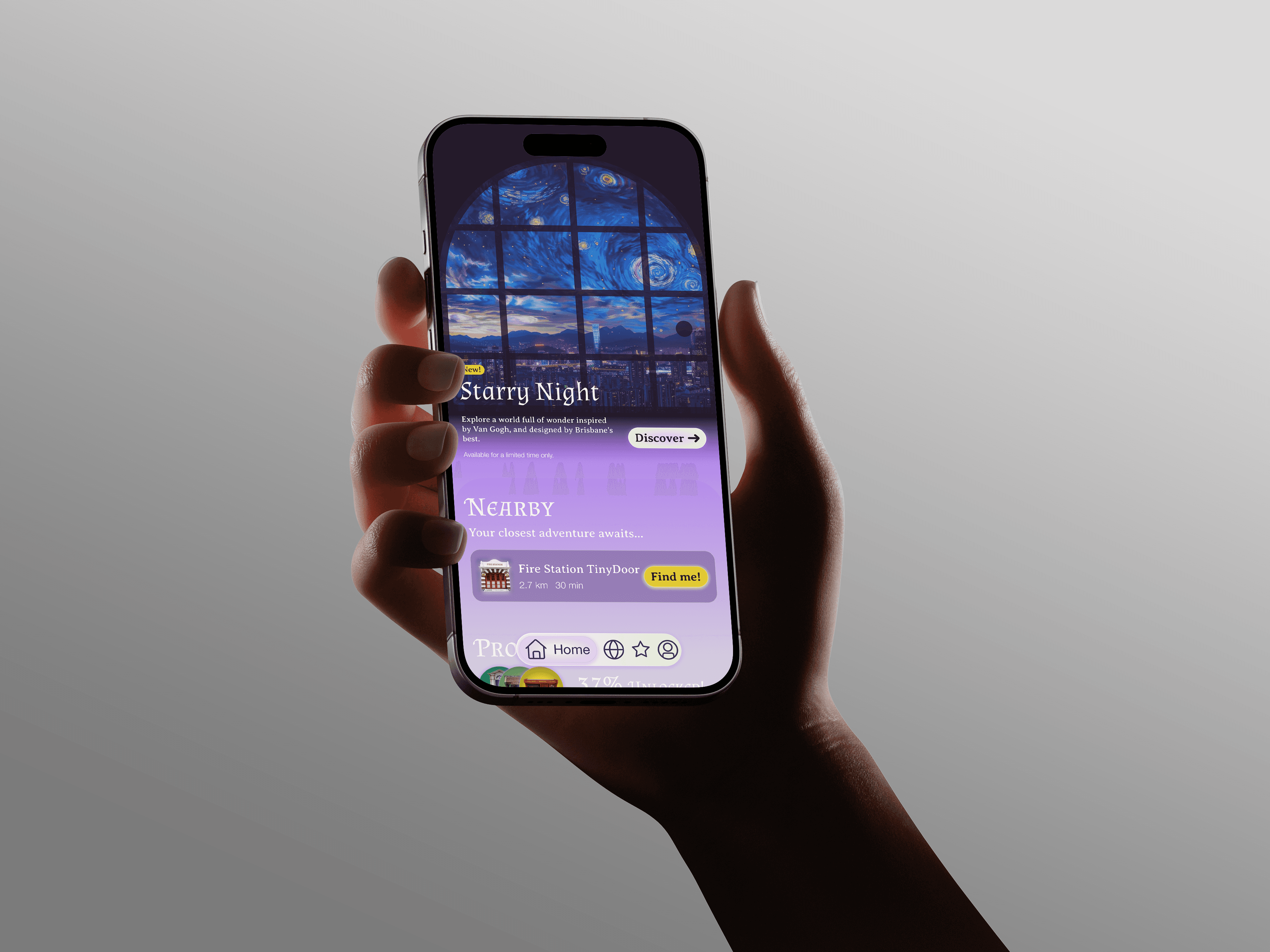
Our initial prototype lacked on—the—go visibility due to it's simplicity in functionality. Upon feedback, I suggested the integration of a Home Screen which includes an overview of nearby TinyDoors based on the user's current location, a 'What's New?' section, and progress snapshot.
This allowed us to further tackle our goal of user retention.
Simplicity is key with AR interactions
We intended users to solve a riddle, obtain a virtual key, and use it to unlock the Tiny Doors to reveal a (supersized) Tiny World. This was evidently too difficult for most users.
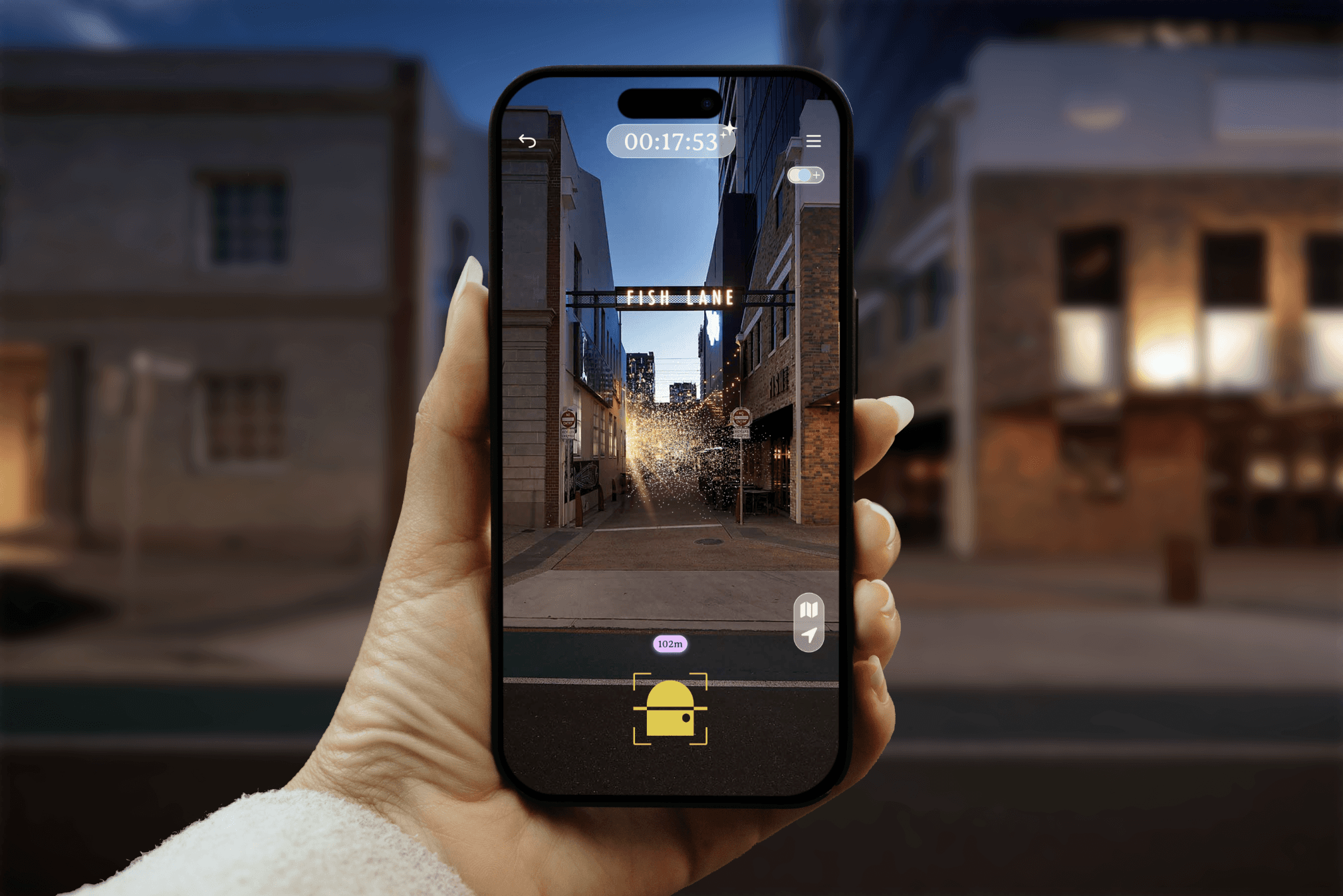
Our team pivoted with my suggestion to integrate hand—tracking capabilities. When a user has successfully navigated to a Tiny Door, they simply open the in—built camera functionality, position their hand within the frame, and a virtual key will automatically appear.
Final Design
TinyTrails is an adventure-based exploration game that combines augmented reality and multi-sensory design to bring Brisbane’s Tiny Doors to life.
FEATURES
Explore and escape to a new world.
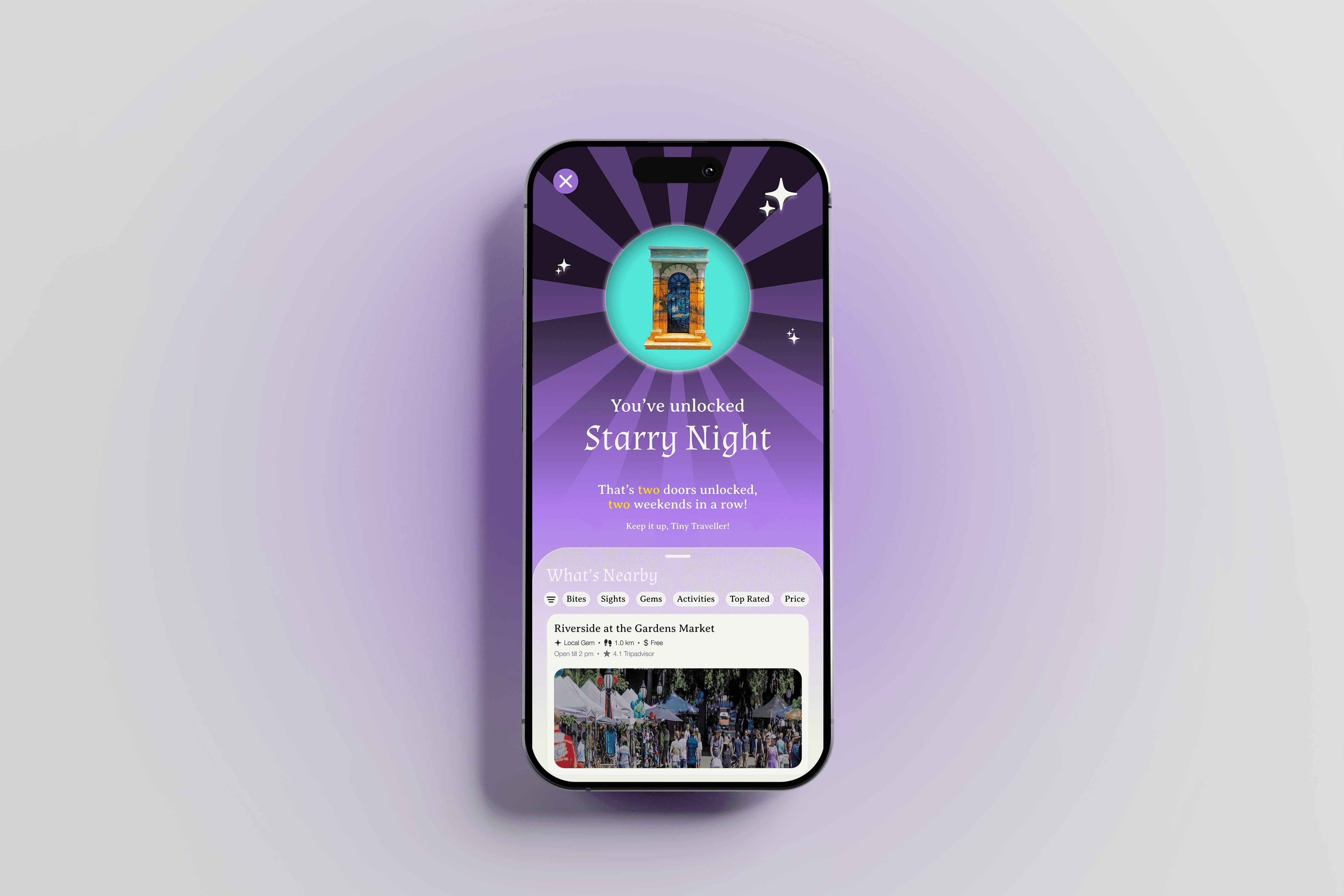
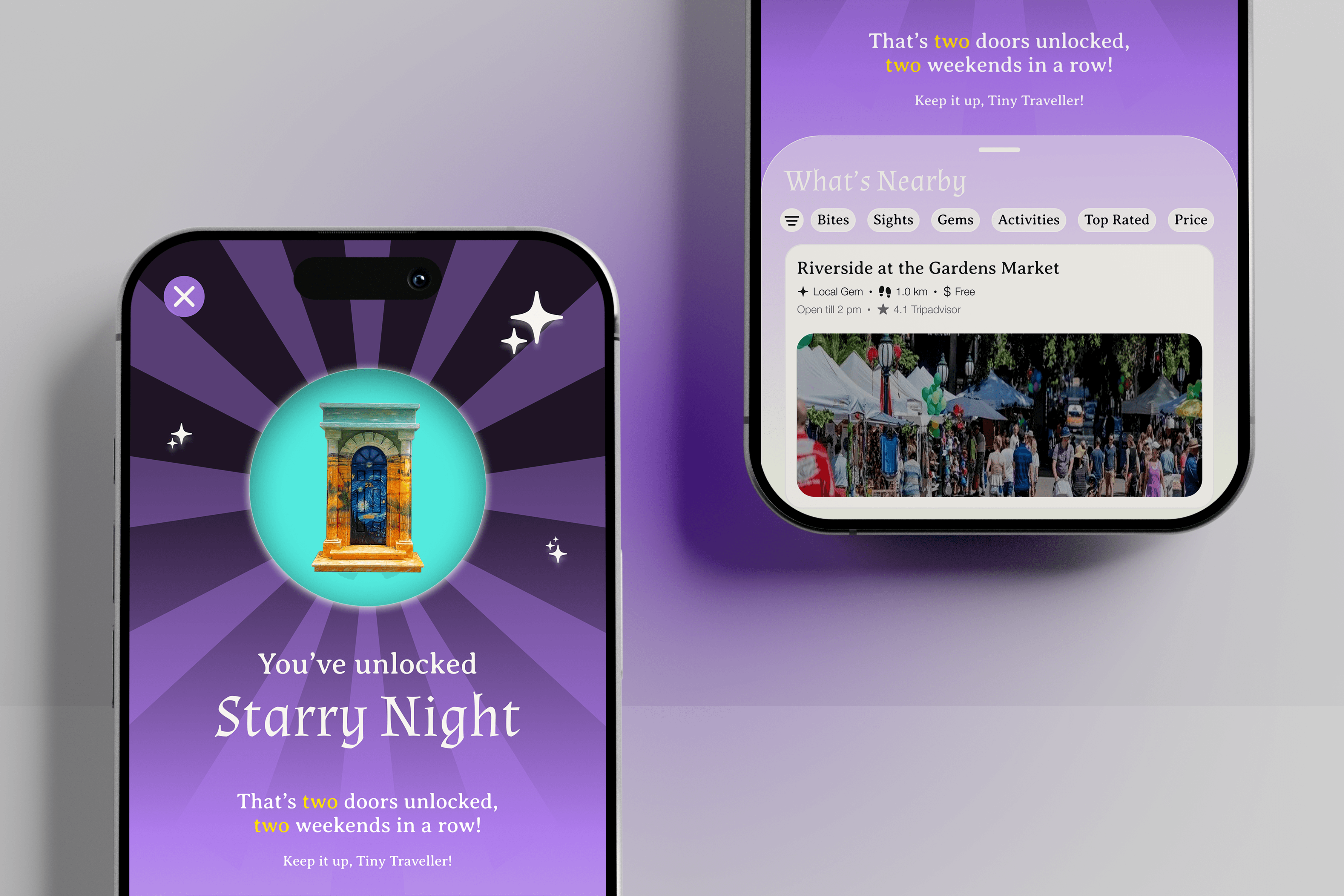
Embark on an augmented mission of discovery, ‘unlock’ the Tiny Door and enter into a new world.
Be rewarded. Then, share with friends.
Complete challenges, and win a digital token. Snap a picture and share the achievement online.
Local recommendations, curated just for you.
Receive personalised AI recommendations on local sights, bites, and other nearby delights.
IMPACT
Though hypothetical, the intended impact of TinyTrails aims to re-imagine the typical Brisbane experience. The mobile application injects fun and novelty into the mundane, transforming static experiences into long—lasting memories.
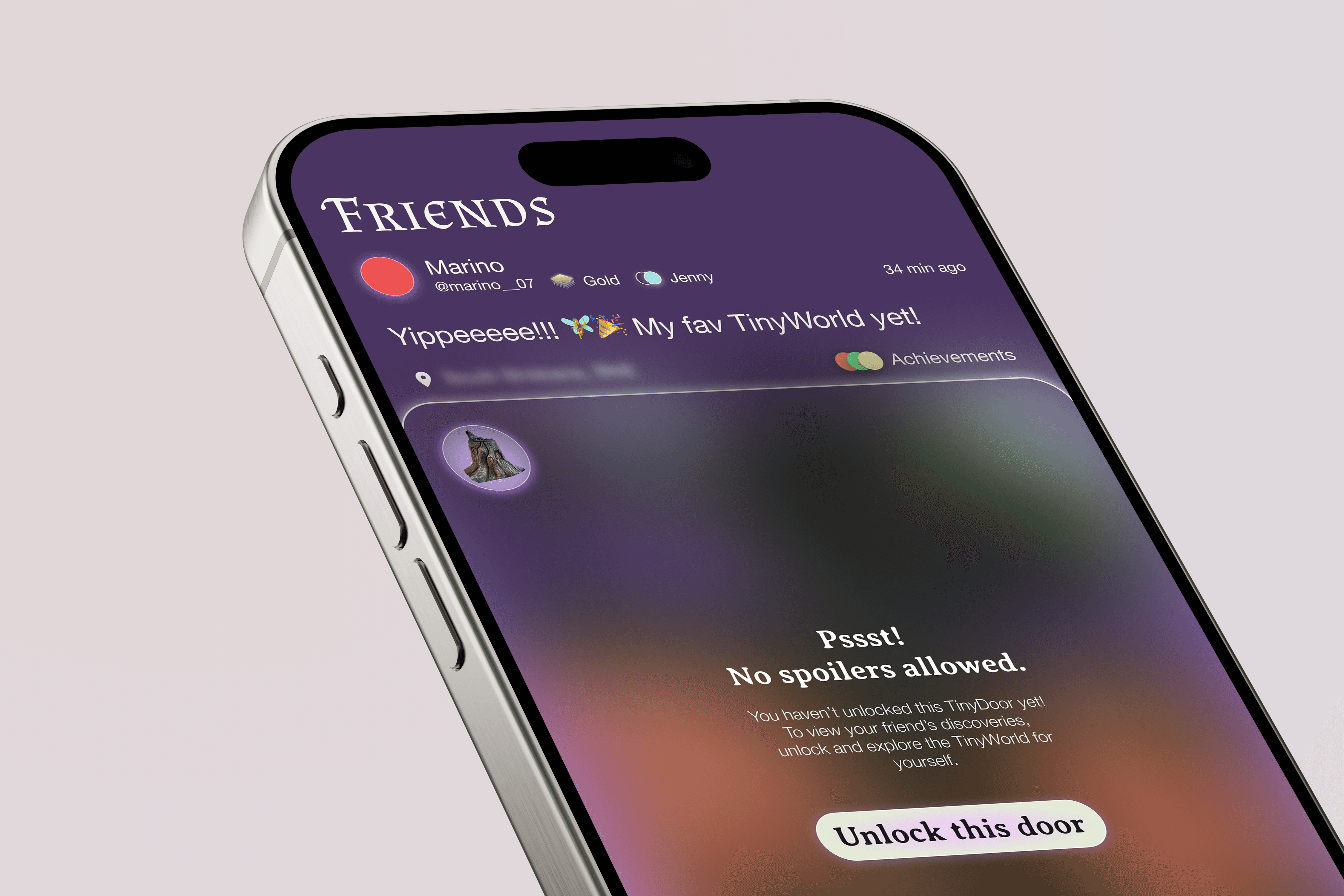
With the addition of a 'Friends' feed, TinyTrails helps nurture friendships, creates new connections, and builds community.
Localised, and personalised recommendations help to champion small businesses and Brisbane's tourism, while providing users with interest—specific things to see and do.
FUTURE
Conceptual Future
Platforming local artists
I would love to collaborate with local Brisbane artists in the creation of new, seasonal and festive Tiny Doors, and immersive Tiny Worlds.
Prototype Future
Increased Functionality + Fidelity
I would love to expand the functionality of this prototype by extending the level of AR integration. I aim to continue developing and refining the prototype to push my creativity and produce a more seamless, enjoyable experience for users.
©2026
FOLIO
LEMAN
DESIGN